
Regenerative Mushroom Farming in Hawai'i: Turning Agricultural Byproducts into Substrate
- volcanomushrooms
- Nov 21, 2025
- 3 min read
Updated: 3 days ago
Why Mushroom Substrate Matters
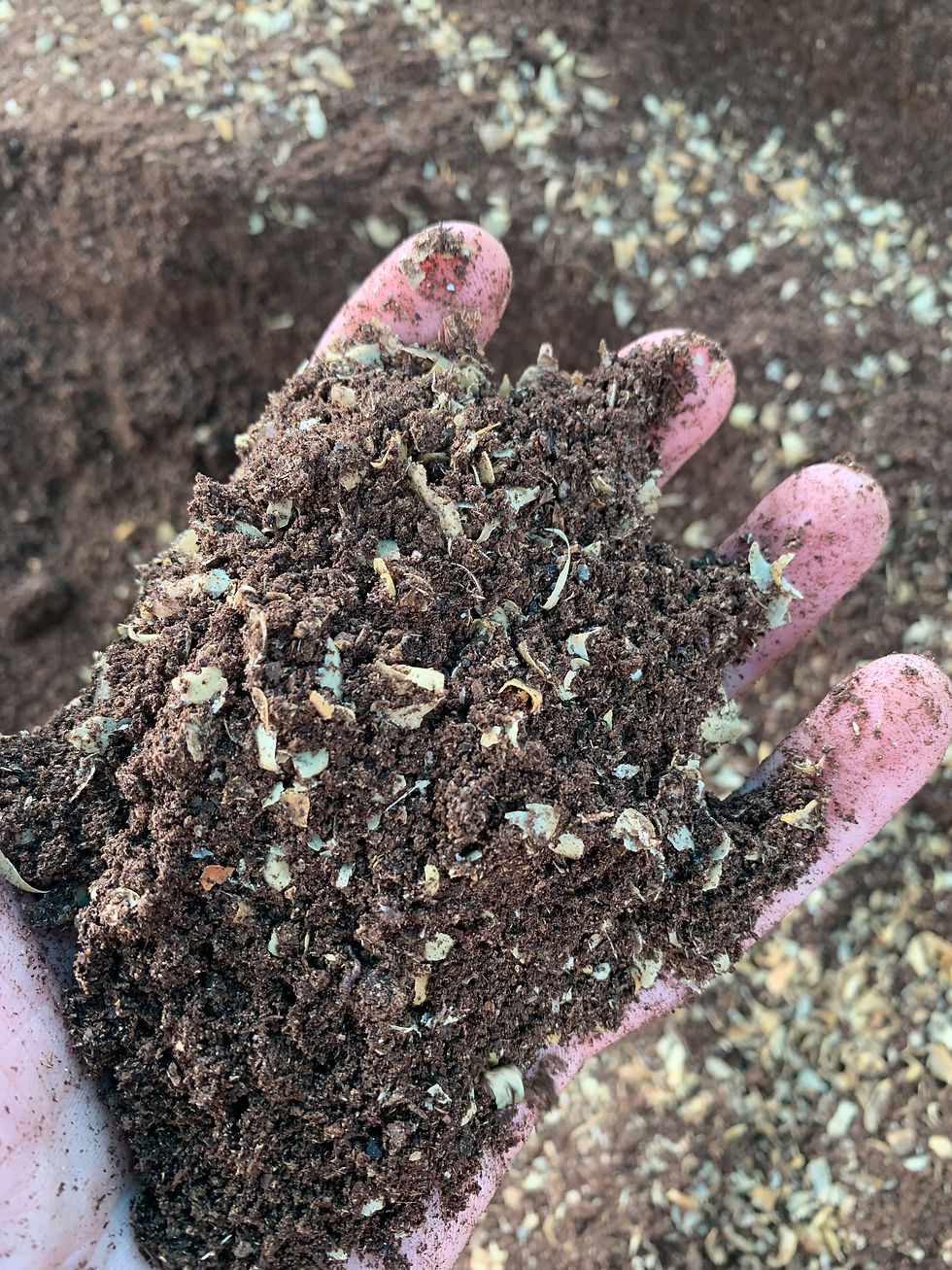
At Volcano Mushrooms, we grow functional mushrooms on Hawaiʻi Island using a regenerative substrate made from local agricultural byproducts, including macadamia husk, macadamia shells, coffee parchment, and a small amount of rice bran. This growing medium allows us to reduce waste, support local agriculture, and cultivate mushrooms in a way that reflects the natural recycling role of fungi. As a small business dedicated to sustainable agriculture, we took the decision seriously to continue opting for regenerative byproducts as the substrate for our mushroom growing medium.
In mushroom cultivation, substrate is the material that mycelium grows through before mushrooms form. It serves as the foundation of the growing process. In nature, fungi grow on fallen trees, bark, leaves, and other organic matter. On our farm, we use locally available farm byproducts as part of a growing system inspired by the same natural process.
Why We Moved Beyond Local Sawdust
Using sawdust from the local sawmill on the island was no longer an option, as there simply wasn’t enough available to meet the scale required for our cultivation. Faced with this challenge, we began researching alternative substrates that aligned with our values and local resources.
Using Macadamia Husk and Coffee Parchment as Mushroom Substrate
That research led us to an unconventional idea: using macadamia nut shells and husks, along with coffee parchment from a local coffee mill. It was a leap of faith. After combing the internet for any references to growing mushrooms on macadamia byproducts—and finding none—we knew we were stepping into uncharted territory.
How Mycelium Transforms Agricultural Byproducts
We continued researching how mycelium breaks down tough lignin structures in materials like bark and sawdust, and began to see parallels with macadamia shells and husks. With more than 5,000 acres of macadamia nut orchards on Hawaiʻi Island, also known as the Big Island, we saw an opportunity to build a more locally rooted mushroom cultivation system.
So we went for it. We invested in a small hammer mill to reduce the particle size of the macadamia byproducts and dial in appropriate substrate ratios. After several months of experimentation, we refined a substrate recipe incorporating macadamia husk, coffee parchment, and a small amount of rice bran to boost yields. Thus began a new era in our mushroom farming journey.
A Closed-Loop Approach to Mushroom Farming on Hawaiʻi Island
By using macadamia byproducts, we continue our mission of cultivating high-quality mushrooms on Hawaiʻi Island while relying on regenerative materials sourced from local agriculture. We are constantly refining our substrate recipes based on the specific mushrooms we’re growing, and by transforming these byproducts into rich, living substrates, we create a closed-loop system that supports sustainability, reduces waste, and nourishes our community.
Our regenerative substrate system is part of what makes our Hawaiʻi-grown mushrooms unique. Explore our mushroom extracts, including Lion’s Mane, Red Reishi, Oyster, Turkey Tail, Chaga, and Mushroom Harmony, each crafted with care and rooted in our farm’s commitment to regenerative cultivation.
Frequently Asked Questions
What is mushroom substrate?
Mushroom substrate is the growing medium that mycelium colonizes before mushrooms form. In nature, fungi grow on materials like fallen trees, bark, leaves, and other organic matter. On our Hawaiʻi Island farm, we use a carefully prepared blend of local agricultural byproducts, including macadamia husk and coffee parchment, as part of our regenerative mushroom cultivation process.
Why do you use macadamia husk and coffee parchment to grow mushrooms?
We use macadamia husk and coffee parchment because they are locally available agricultural byproducts that would otherwise have limited use or be discarded. By incorporating them into our mushroom substrate, we are able to reduce waste, support local agriculture, and work with the natural ability of fungi to transform organic material into mushroom fruiting bodies.
Are your mushrooms grown on Hawaiʻi Island?
Yes. Our Lion’s Mane, Red Reishi, and Oyster mushrooms are cultivated on our Hawaiʻi Island farm using our regenerative substrate system. Turkey Tail and Chaga are U.S. wild-harvested because those mushrooms naturally grow in different forest climates.
Why does regenerative substrate matter in mushroom farming?
Regenerative substrate matters because it connects mushroom cultivation to a larger cycle of reuse and renewal. Instead of relying only on imported or conventional materials, we use local farm byproducts as part of a growing system inspired by the way fungi recycle nutrients in nature.


