The Transformative Power of Fungi
- volcanomushrooms
- Apr 25
- 3 min read
Updated: 6 days ago

Introduction
Using agricultural byproducts from here on the island to fuel our mushroom production wasn’t just a practical decision—it was a philosophical one. It reflects our commitment to building a truly regenerative farm system. The deeper reason this works comes from how fungi evolved. Mushrooms didn’t start on farms—they evolved in forests as recyclers. What looks like waste to us—fallen trees, husks, and plant debris—is actually food to fungi. They are nature’s original system for turning death back into life.
The Forest Recycling System
Forest ecosystems are constantly cycling through stages of growth, death, and renewal. This process unfolds in five phases:
1. Disturbance & Initiation - A tree falls, a storm hits, or fire moves through. The canopy opens, allowing sunlight to reach the forest floor.
2. Gap Phase- Seeds already present in the soil begin to sprout. Fast-growing pioneer species rush to capture light and space.
3. Building Phase - As plants grow, competition intensifies. Weaker individuals die off in a natural process called self-thinning, allowing stronger trees to dominate.
4. Mature & Degenerative Phase - The forest ages. Trees become stressed, die, and fall—creating new gaps in the canopy.
5. Climax (Steady State) - A dynamic balance is reached. The forest is stable, yet always shifting through small disturbances that keep the cycle alive.
Through every stage of this process, one hidden force is constantly at work beneath the surface.
The Hidden Work of Mycelium

Beneath the forest floor exists a vast living network known as mycelium—the true organism behind mushrooms. What we see above ground is just the fruiting body. The real work happens underground.
Mycelium forms intricate connections with plant roots, often referred to as the “wood-wide web.” Through these networks:
Nutrients and water are shared between plants
Seedlings receive support from mature “mother trees”
Stress signals and defense responses move through the ecosystem
This system increases survival, resilience, and recovery after disturbance. Mycelium also drives decomposition. It releases enzymes that break down tough plant fibers like lignin—the structural backbone of wood—turning them into usable nutrients. Without fungi, forests would choke on their own debris. With them, waste becomes the foundation for new life.
From Forest to Farm
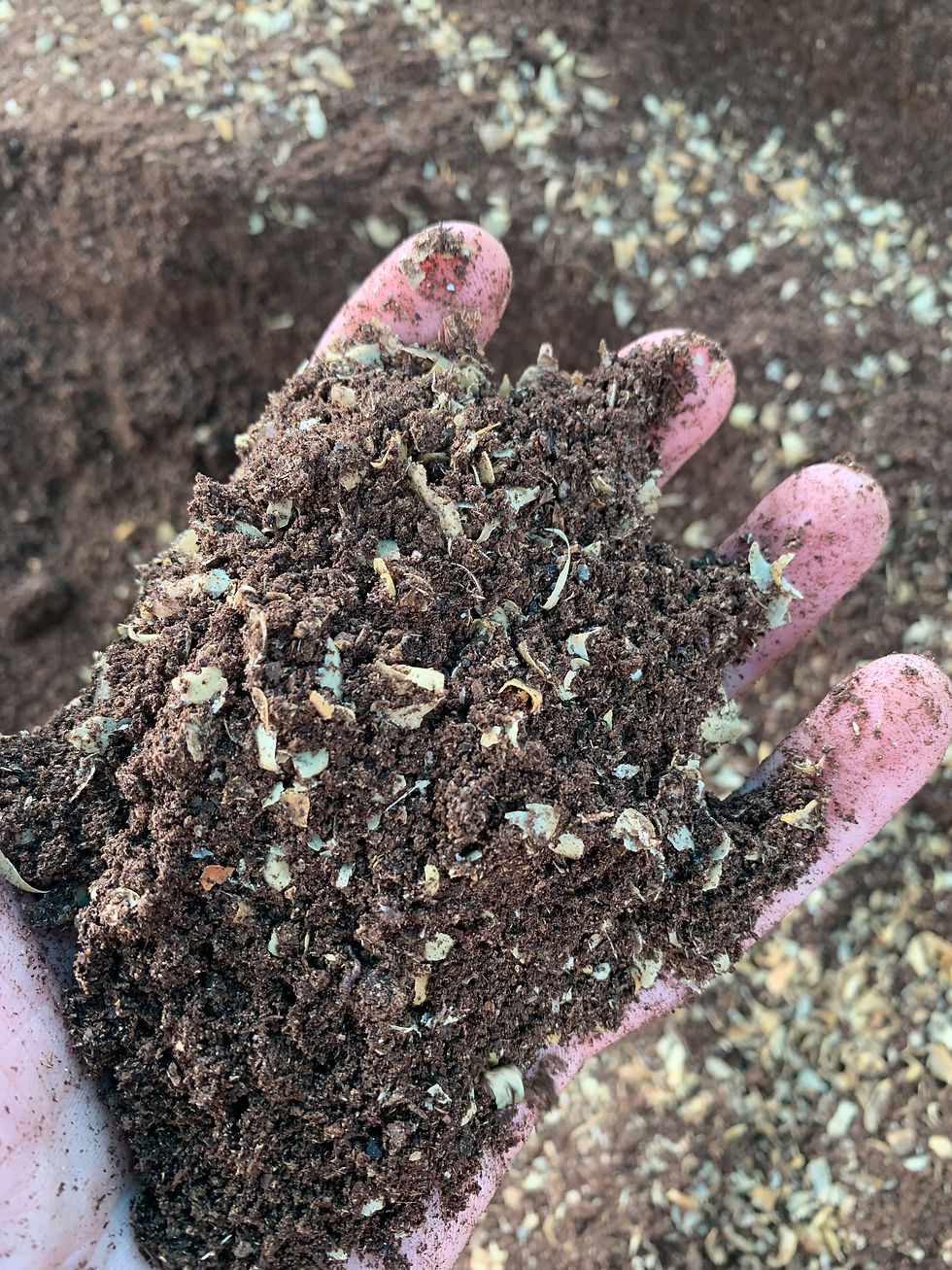
Instead of relying on imported or synthetic materials, we use locally available agricultural byproducts—like macadamia husk and coffee parchment—that would otherwise be discarded. In nature, fungi break down fallen trees. On our farm, they break down agricultural waste.
The process is the same:
Mycelium colonizes the material
Enzymes break it down
Nutrients are transformed and concentrated
Mushrooms grow as the final expression of that cycle
We’re not reinventing anything—we’re just working with a system that’s been refining itself for millions of years.
The Transformative Power of Fungi

As fungi break down these materials, they don’t just recycle nutrients—they transform them.
Compounds locked in tough plant structures become bioavailable. As fungi break down these materials, they transform nutrients and naturally occurring compounds into the mushroom fruiting bodies we harvest. Modern research continues exploring many of the unique compounds found within mushrooms, while traditional wellness practices have valued these fungi for centuries.
The mushrooms we harvest carry the intelligence of this process—decomposition, transformation, and regeneration. What begins as agricultural waste becomes a nutrient-rich mushroom cultivated through one of nature's most remarkable recycling systems. This is the transformative power of fungi.
A Regenerative Loop
When we grow mushrooms this way, we’re participating in a closed-loop system:
Agricultural waste is repurposed
Mushrooms are cultivated
Nutrients are extracted for human use
Remaining material returns to the soil
Nothing is wasted. Everything cycles forward. This is how forests have functioned long before agriculture—and it’s the model we choose to follow.
Why It Matters

In a world where waste is constantly accumulating, fungi offer a different perspective. They show us that waste isn’t the end of a system—it’s the beginning of the next phase. By growing mushrooms this way, we’re not just producing food or extracts—we’re participating in a regenerative cycle that restores value to what would otherwise be discarded.
Conclusion
Mushroom cultivation, when done this way, isn’t just farming—it’s alignment with nature.
Fungi teach us that nothing is wasted. Everything is transformed.
From the forest floor to the farm, the same principle holds true:
Life feeds on what came before it—and in doing so, creates what comes next.
Explore Our Mushrooms
Grown on our regenerative farm using local agricultural byproducts and carefully crafted for full-spectrum extraction, our mushrooms are a direct extension of this natural cycle.